
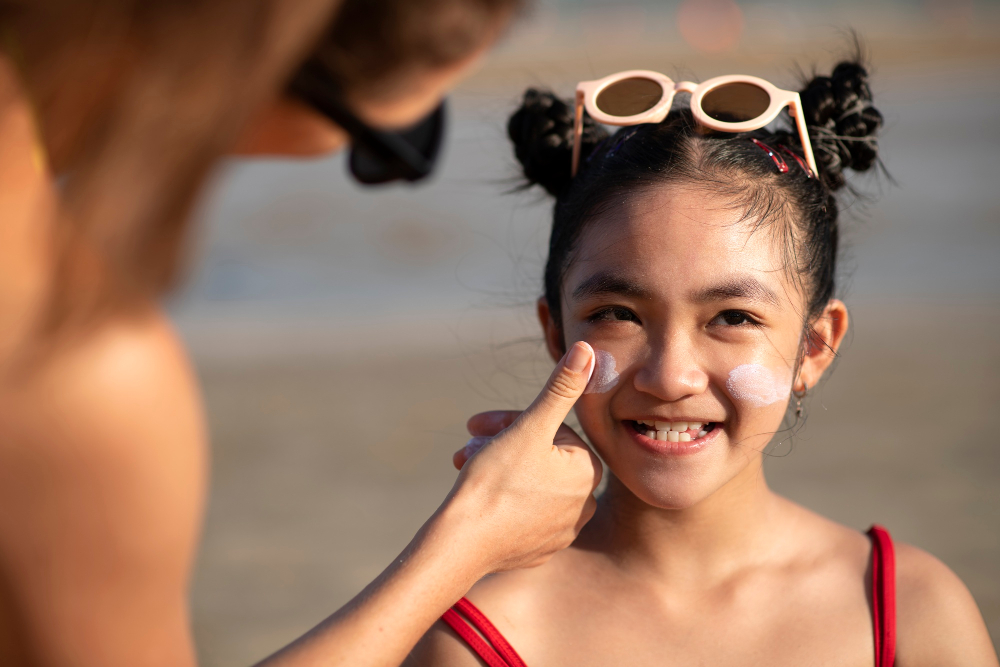
Why Sun Safety Matters for Children
Sun safety tips for kids are important for every parent and caregiver. Children’s skin is more sensitive than adults. Because of this, they can get sunburned quickly. Even on cloudy days, harmful UV rays can reach your child’s skin. Over time, too much sun can cause skin damage. It may also raise the risk of skin cancer later in life. Therefore, teaching sun protection for children helps keep them healthy now and in the future.
Risks of Sun Exposure in Kids
Many parents know about sunburn, but there are other risks, too. For example, repeated sunburns can lead to early skin aging. In some cases, too much sun can cause heat exhaustion or dehydration. According to the CDC, most skin cancers are linked to too much sun exposure during childhood. So, it is important to take steps to prevent sunburn in kids every day.
Essential Sun Safety Tips for Kids
There are many ways to protect your child from harmful UV rays. Here are some simple tips you can use:
In addition, make sun safety part of your daily routine. This helps children learn good habits early.
How to Choose and Apply Sunscreen for Children
Choosing the best sunscreen for kids can feel confusing. However, a few simple steps can help. First, look for a sunscreen labeled “broad-spectrum.” This means it protects against both UVA and UVB rays. Next, pick an SPF of 30 or higher. For sensitive skin, mineral sunscreens with zinc oxide or titanium dioxide are gentle choices. Always check the label for age recommendations.
When applying sunscreen, follow these tips:
Even on cloudy days, UV rays can cause sunburn. So, make sunscreen a daily habit.
Signs of Sunburn and What to Do
Sometimes, even with care, kids may get sunburned. Watch for these signs:
If your child gets sunburned, act quickly. First, move them out of the sun. Next, cool the skin with a damp cloth or a cool bath. Offer water to prevent dehydration. You can also use a gentle moisturizer or aloe vera gel. However, avoid creams with alcohol, as they can dry the skin. If blisters form, do not pop them. In addition, keep your child out of the sun until the skin heals.
Prevention Strategies and Daily Routines
Building sun safety into your family’s routine is easy. For example, keep hats and sunscreen by the door. Remind kids to wear sunglasses before going outside. Plan outdoor activities early in the morning or late afternoon. In hot climates or during summer months, take extra care. Encourage your child to play in the shade whenever possible. Over time, these habits will become second nature.
When to Seek Medical Advice
Most sunburns can be treated at home. However, you should call your doctor if:
Early medical care can help prevent complications. Therefore, do not wait if you are worried about your child’s health.
Summary: Keep Kids Safe in the Sun
In summary, sun safety tips for kids are simple but very important. By using sun protection for children every day, you help prevent sunburn and long-term skin damage. Remember to dress your child in protective clothing, use sunscreen, and seek shade. Also, teach your child to drink water often and wear sunglasses. If you need advice on sun safety or sunscreen for your child, Safe Hospital’s pediatric specialists are here to help.