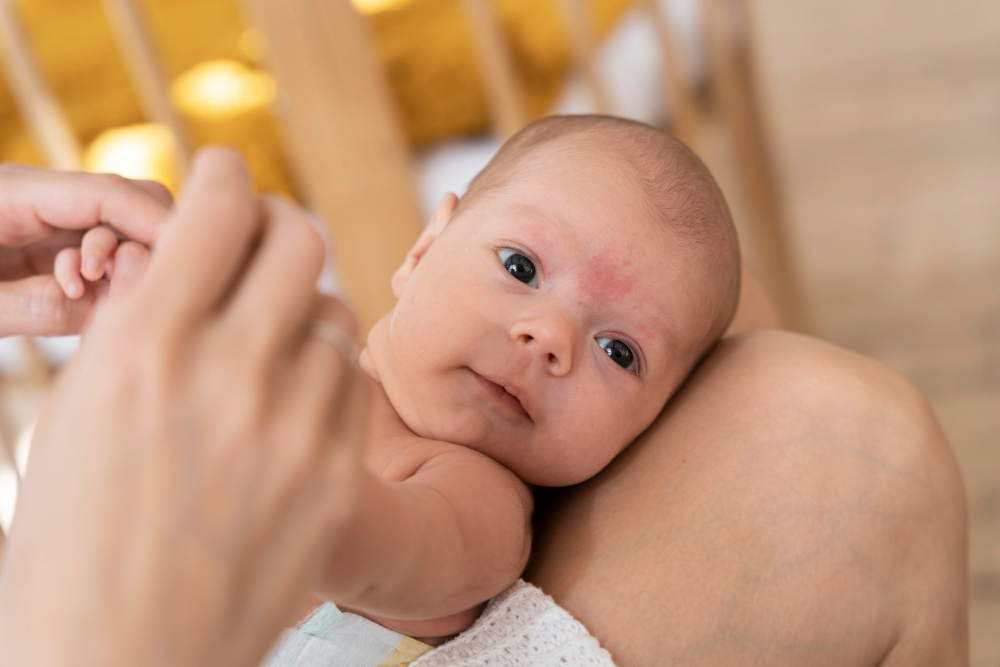
Many parents notice changes in their baby’s skin soon after birth. Common skin problems in newborns can look scary, but most are harmless and easy to treat. Because a newborn’s skin is delicate, it often reacts to the new world outside the womb. In this guide, you will learn about the most common skin issues, how to spot them, and newborn skin care tips to keep your baby comfortable.
Overview of Newborn Skin
Newborn skin is much thinner than adult skin. Therefore, it is more sensitive to touch, temperature, and moisture. For example, a baby’s skin may look red, dry, or even flaky in the first weeks. In addition, some babies have tiny bumps or patches that come and go. Because newborns are still adjusting, these changes are usually normal. However, knowing what is typical can help you spot problems early.
Most Common Skin Problems in Newborns
Several skin conditions often appear in the first weeks of life. While most are not serious, it helps to know what to expect. Below are some of the most common skin problems in newborns:
Causes and Risk Factors
Many newborn skin problems have simple causes. For example, a baby’s skin is still developing and can react to many things. Common causes and risk factors include:
Because newborns have sensitive skin, even gentle soaps or lotions can sometimes cause irritation. In addition, babies born in warm climates, such as newborn skin care in Miami, may be more likely to get heat rash.
How to Identify Skin Problems in Newborns
Because many skin issues look alike, it helps to know what to watch for. For example, you might notice:
However, most newborn rashes do not bother the baby. If your baby seems happy and feeds well, the rash is likely mild. Still, always check with your doctor if you are unsure.
Safe and Effective Care Tips
Gentle care is the best way to treat baby skin rashes. For example, you can:
Because some products can irritate, always choose fragrance-free and gentle baby lotions. In addition, avoid scrubbing or picking at your baby’s skin.
When to Seek Medical Advice
Most newborn skin problems are mild and go away on their own. However, you should contact your doctor if you notice:
Because some rashes can be a sign of infection, it is always better to ask your doctor if you are worried. The CDC and WHO recommend checking with a healthcare provider if you see any warning signs.
Prevention Strategies for Newborn Skin Issues
There are simple steps you can take to help prevent skin problems in infants. For example:
Because every baby is different, you may need to try a few newborn skin care tips to see what works best. In addition, talk to your doctor about any concerns or questions you have about your baby’s skin.
Conclusion
If you notice any skin changes in your newborn or have concerns, Safe Hospital is here to help. Schedule a visit with our pediatric team for gentle care and expert advice.